
LDPE Regrind Products
Low-Density Polyethylene - Flexible, Versatile Grade for Film & Packaging
LDPE Regrind (Low-Density Polyethylene)
Flexible, Versatile Grade for Film & Packaging
Our LDPE (Low-Density Polyethylene) Regrind is a highly versatile and economical recycled polymer, primarily sourced from clean Post-Industrial Recycled (PIR) film and flexible packaging scrap. Renowned for its flexibility, excellent impact strength, and ease of processing, LDPE Regrind is ideal for manufacturers looking to produce durable films, bags, and various molded parts.
Technical Snapshot & Specifications
Key properties and trading details for LDPE Regrind
| Specification | Primary Value | Key Trading Detail |
|---|---|---|
| Polymer Type | Low-Density Polyethylene (LDPE) | High flexibility; distinct from HDPE's rigidity |
| Material Source | Post-Industrial (PIR) Film Scrap | Ensures clean, consistent quality, often in pellet or flake form |
| Color | Natural/Translucent, White, or Specific Colors | Natural/clear is premium; white is common |
| Melt Flow Index (MFI) | Variable (e.g., 0.5 – 5.0 g/10min) | Crucial to specify! Lower MFI for film extrusion; higher for injection |
| Density | 0.910 – 0.925 g/cm³ | Low density, good yield |
| Contamination | Extremely Low (PIR) to Moderate (Washed PCR) | Film grades require minimal non-LDPE or foreign material |
Primary Applications
LDPE Regrind is a primary material for diverse manufacturing needs
Film Extrusion
Heavy-duty bags, industrial liners, shrink wrap, and agricultural films
Injection Molding
Flexible caps, closures, toys, and various houseware items
Compounding
As a base resin for color masterbatches or specialized flexible compounds
Pipes & Tubing
Flexible irrigation tubing and conduit
1. LDPE Stretch Film Scrap
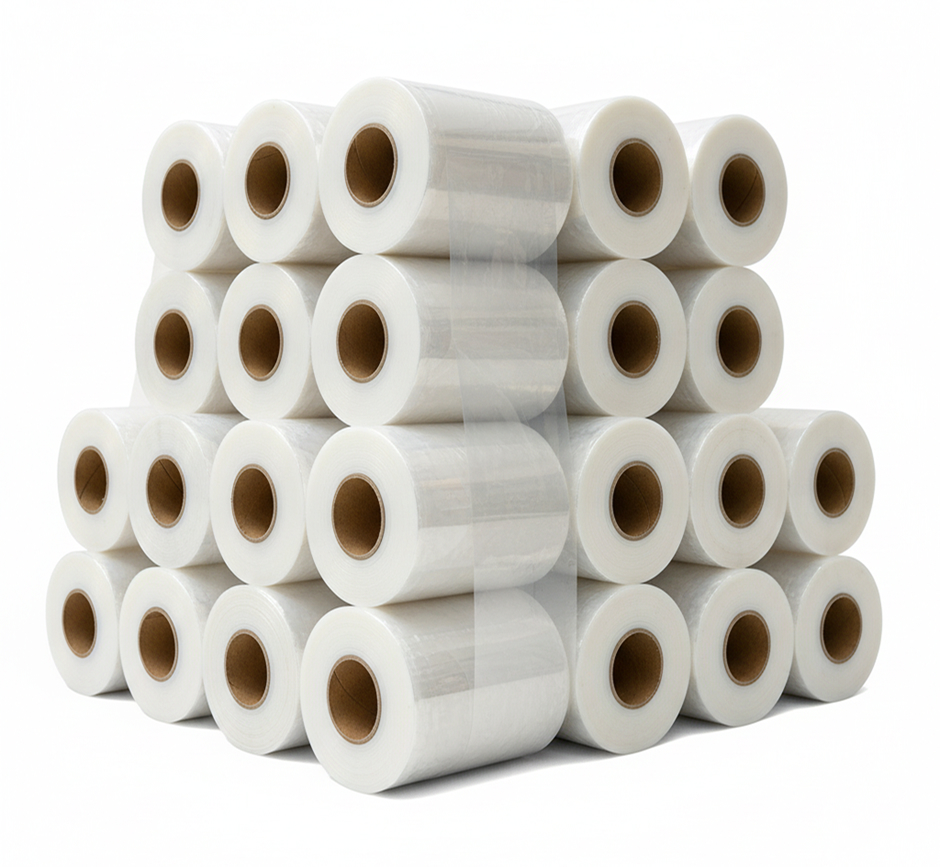
This material is a clean, baled collection of used Low-Density Polyethylene (LDPE) Stretch Film, primarily sourced from post-commercial or post-industrial logistics and warehousing operations (pallet wrap). This is the key feedstock used to produce high-quality LDPE Film Regrind.
Key Characteristics
| Characteristic | Detail | Importance for Buyer/Seller |
|---|---|---|
| Form | Highly compressed bales (approx. 1,000 – 1,500 lbs each) | Determines shipping and handling costs |
| Material Purity | High (95% or better) | High purity bales are the most valuable and command the highest price |
| Contamination | Adhesives, paper labels, small amounts of other plastic (LLDPE) | CRITICAL. Purity must be certified. High contamination lowers yield and value |
| Color | Predominantly clear/natural | Allows for recycling into new, high-clarity films |
2. LDPE Bottle Regrind
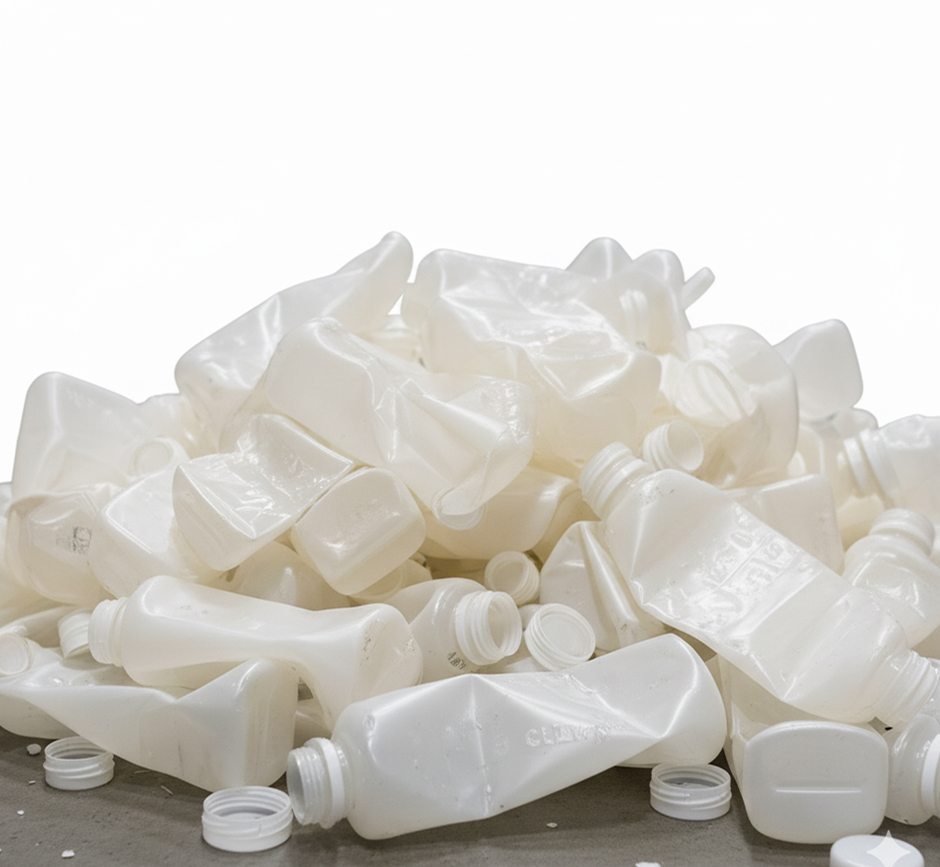
High-Flow, Flexible Grade for Injection & Blow Molding
Our LDPE Bottle Regrind is sourced from post-consumer or post-industrial squeeze bottles, dropper bottles, and flexible closures. This material is inherently engineered for flexibility, excellent chemical resistance, and a higher Melt Flow Index (MFI) compared to LDPE film, making it perfect for injection and blow molding processes.
Technical Snapshot & Specifications
| Specification | Primary Value | Key Trading Detail |
|---|---|---|
| Polymer Type | Low-Density Polyethylene (LDPE) | Optimized for flexible, semi-rigid applications |
| Material Source | Squeeze Bottles, Caps, Dropper Bottles | High-MFI grade suited for molding |
| Color | Natural/Translucent, White, or Mixed | Natural/Clear is the premium grade |
| Melt Flow Index (MFI) | 2.0 – 10.0 g/10min (at 190°C/2.16 kg) | Medium Flow. Required for blow molding and high-speed injection |
| Density | 0.915 – 0.930 g/cm³ | Consistent density for blow molding stability |
| Contamination Note | Caps and labels are the main contaminants | Requires hot washing and air separation to ensure high quality |
Need LDPE Regrind Materials?
Contact our technical sales team for detailed specifications, material samples, and competitive bulk pricing for your specific application requirements.
Request a Quote