
Polypropylene (PP) Regrind
PP (Recycling Code 5) – Lightweight, Versatile Commodity Thermoplastic
What is PP (Polypropylene)?
One of the World’s Most Versatile Commodity Thermoplastics
PP stands for Polypropylene (Recycling Code 5). It is one of the most widely used and versatile commodity thermoplastics in the world.
PP Summary: Key Facts & Properties
Core physical, mechanical, and chemical characteristics of Polypropylene
| Category | Detail |
|---|---|
| Chemical Name | Polypropylene |
| Recycling Code | 5 |
| Density | Very Low ($\sim 0.90 \text{ g/cm}^3$); it is one of the lightest commercial plastics. |
| Heat Resistance | High melting point (up to $160^{\circ}\text{C}$), suitable for microwaveable or hot-fill containers. |
| Chemical Resistance | Excellent resistance to acids, bases, and many organic solvents |
| Mechanical Property | Known for good stiffness and outstanding fatigue resistance (able to withstand repeated bending, like a living hinge). |
1. PP Natural Regrind
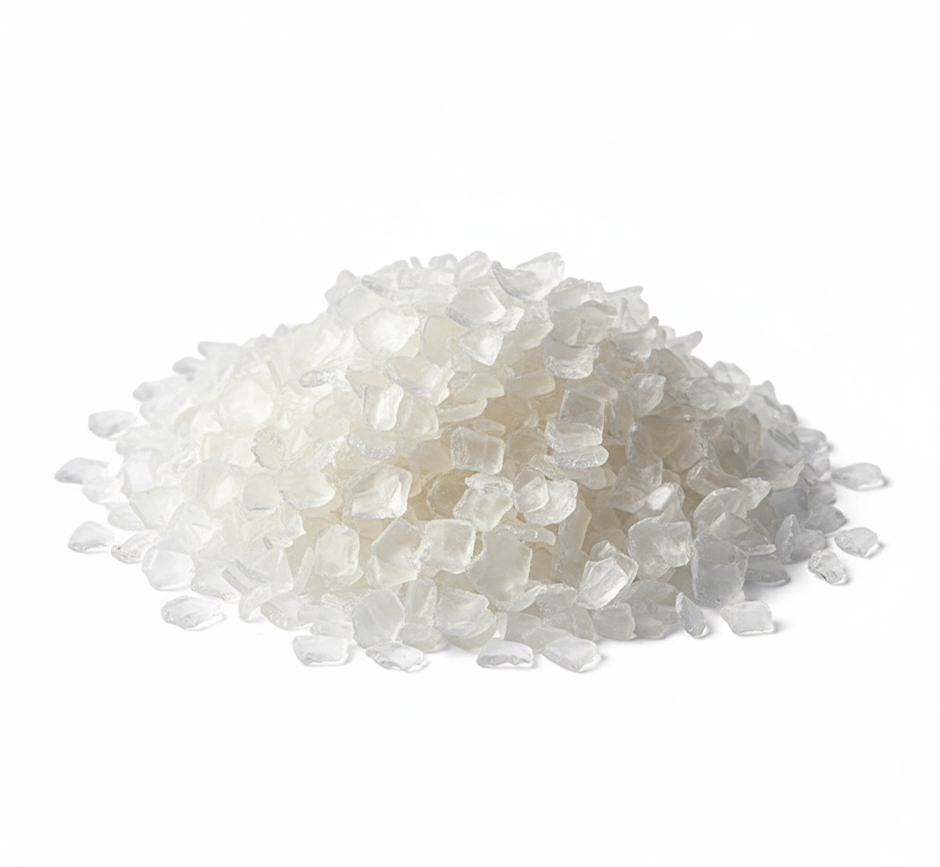
Premium, Near-Virgin Grade for High-Performance Applications
Our PP Homopolymer Natural Regrind is sourced from pristine Post-Industrial Recycled (PIR) manufacturing scrap. This uncolored material guarantees maximum purity and stiffness, making it the ideal choice for manufacturers requiring precise color matching and exceptional mechanical performance that rivals virgin resin.
Technical Snapshot & Specifications
| Specification | Primary Value | Key Trading Detail |
|---|---|---|
| Grade Type | Homopolymer (PP-H) | Highest stiffness and rigidity among PP grades |
| Material Source | Post-Industrial Recycled (PIR) | Certified low contamination; near-virgin quality |
| Color | Natural / Translucent White | Free of dyes; ideal for custom color matching |
| Density | 0.905 – 0.915 g/cm³ | Excellent material yield per tonne |
| Melt Flow Index (MFI) | 8.0 – 25.0 g/10min (at 230°C / 2.16 kg) | Typically high flow; suitable for fast cycle injection molding |
2. PP Mixed Color Regrind
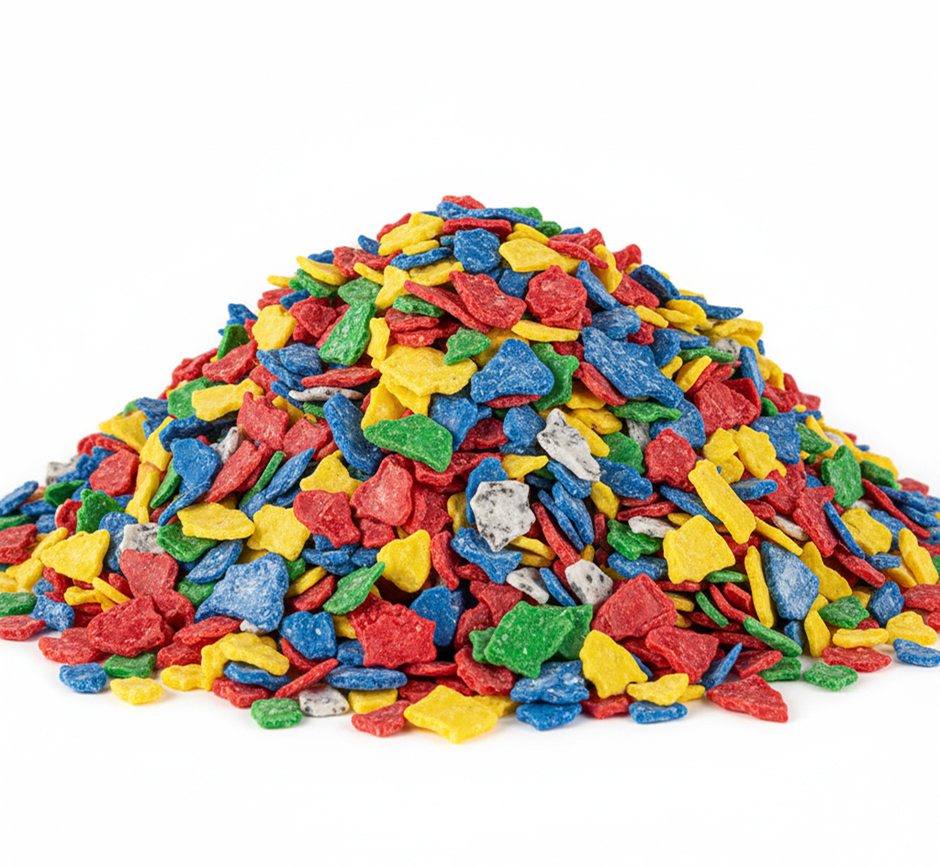
The Economical, Versatile Grade for Dark Applications
Our PP Mixed Color Regrind (also known as "Jazz PP") is an economical and versatile Post-Industrial Recycled (PIR) or Post-Consumer Recycled (PCR) material. Comprising various colors of Polypropylene, this grade is ideal for manufacturers producing non-aesthetic parts that will be compounded into black, grey, or other dark colors. It provides a reliable and cost-effective base material with all the inherent benefits of PP.
Technical Snapshot & Specifications
| Specification | Primary Value | Key Trading Detail |
|---|---|---|
| Polymer Type | Homopolymer or Copolymer | Crucial to specify (e.g., PP-H Mix, PP-C Mix) |
| Material Source | PIR or PCR (e.g., containers, automotive trim) | PCR typically requires washing; PIR is usually cleaner |
| Color | Mixed (Jazz) | Unsuitable for light colors; ideal for dark or black compounding |
| Melt Flow Index (MFI) | Variable (e.g., 5.0 – 30.0 g/10min) | Must be specified per batch; broad range to fit various processes |
| Density | 0.90 – 0.91 g/cm³ | Excellent yield for bulk production |
| Contamination | Low to Moderate | Important to check for foreign materials and non-PP polymers |
3. PP White Regrind
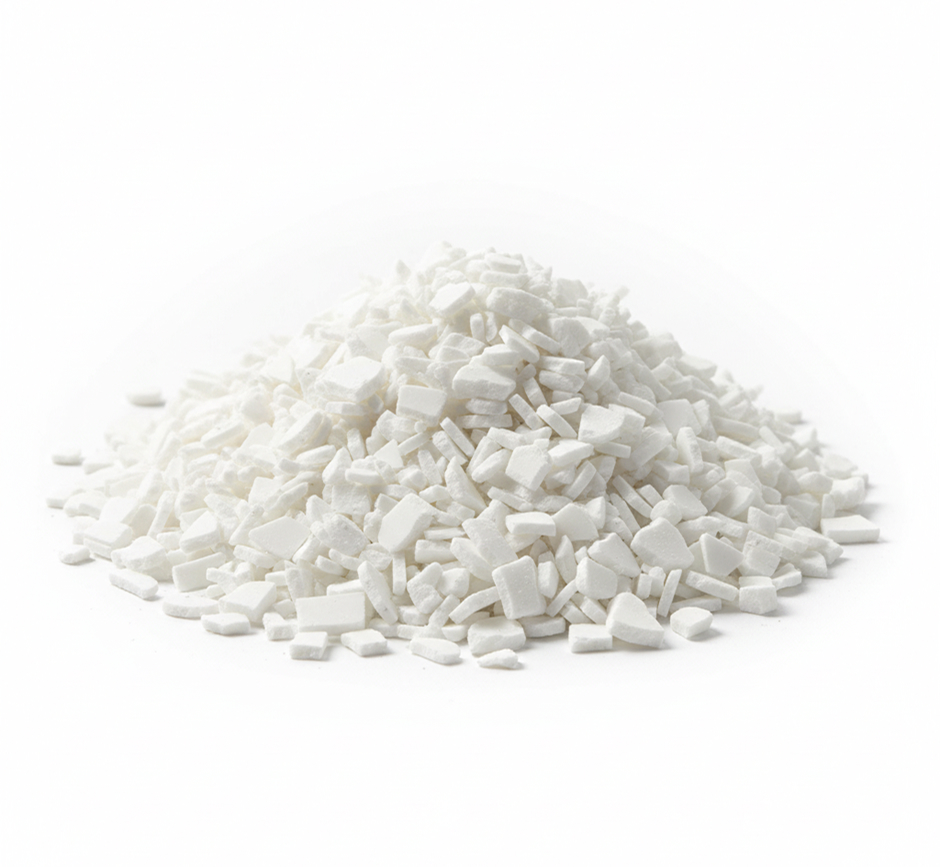
The Consistent Opaque Grade for Light-Colored Products
Our PP White Regrind is a high-quality, pre-pigmented Polypropylene material, primarily sourced from clean Post-Industrial Recycled (PIR) streams. Unlike "Natural" PP, this grade has been specifically manufactured with a consistent white color, making it an ideal, cost-effective solution for producing new products that require a uniform, opaque white finish without the need for additional coloring.
Technical Snapshot & Specifications
| Specification | Primary Value | Key Trading Detail |
|---|---|---|
| Polymer Type | Homopolymer or Copolymer | Crucial to specify (e.g., PP-H White, PP-C White) |
| Material Source | Post-Industrial Recycled (PIR) | Ensures cleanliness and consistent melt flow |
| Color | Solid Opaque White | Consistent L*a*b* values for reliable color output |
| Melt Flow Index (MFI) | Variable (e.g., 5.0 – 20.0 g/10min) | Must be specified per batch; ranges available for injection or extrusion |
| Density | 0.90 – 0.91 g/cm³ | Excellent yield per tonne |
| Contamination | Extremely Low | Minimal specking, ensuring a clean white finish |